Welcome to My Social Psychology Blog
Blog Post 3: Diaries of A Middle Child
These are my brothers:
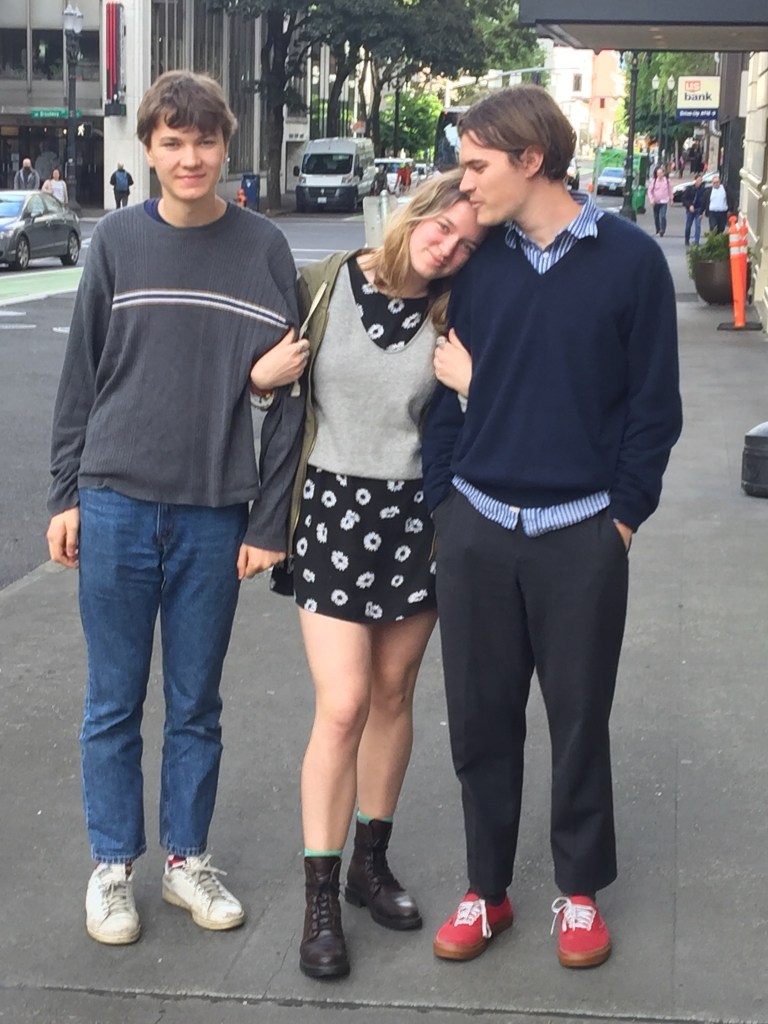
While they are both much larger than me, Nash (on the left) is 3 years younger and Riley (on the right) is 2 years older than me. My brothers are my world, and always have been. I have joked to all my friends and partners that it doesn’t matter if my parent’s like them, but if my brothers don’t approve of them, they’re out. We weren’t always close, and tended to get on each other’s nerves when we were little.

When I was little, I followed Riley around everywhere. I wanted to do everything he did, from making fart jokes to trying to read his 4th grade books when I was in 1st grade. Riley paved the way for what I thought was appropriate, the coolest way to act, and I conformed to everything that he showed me. Conformity can be defined as “a change in behavior or belief as a result of real or imagined group pressure”, and that is exactly what happened to me as I watched Riley grow. When we both got cupcakes for a birthday treat, my first thought was to lick off all the icing, mash the cake into crumbles, and eat them piece by piece. I watched as Riley slowly peeled the wrapper off, and took big bites, icing and all. I followed and did the same. It seemed easier than being yelled at for being gross. Like many older brothers, Riley would pick on me and tell me I was weird. When I expressed interest in certain books or toys, he told me it was for babies or that it wasn’t “cool”. I felt insecure in my interests, and assumed there would be success in his apparent expertise. I started to pick the toys he would pick so I wouldn’t have to listen to the ridicule. I wore his old hand-me-downs so I couldn’t be picked on for my combination of striped leggings and a hot pink polkadot dress. My compliance, meaning I went along with it even though I disagreed, to his social guidelines turned into strict obedience, acting blindly to his commands, as my world of possibilities narrowed into what I was told was acceptable.
Nash watched us quietly, too young to deal with Riley’s mean middle school phases when his orders became more direct than implied. So consumed in trying to be Riley’s friend, Nash’s actions often went unnoticed to me. He would often copy me, finding joy in my passions, like baking and making potions out of every type of shampoo we had in the house. Nash never conformed to my beliefs in the way I did to Riley’s, but he enjoyed sitting beside me as I explored the world.

As we’ve gotten older, Riley and I have become much closer, to the point where I freely call him my best friend. He is my closest confident and my biggest fan, and I his. We call often just to catch up on little things. Last spring when he was in the dark depths of finishing his senior thesis, I called him everyday to make sure he had eaten more than a candy bar and coffee. Last fall when I was struggling to make it to class, he drove 26 hours to visit for the weekend. Through friendship and acceptance of the other person, I have found ways to not constantly compare myself to him. We were on the phone a few months ago and he was complimenting a piece of my writing that my parents had shared with him. It was a creative writing piece, and I expressed my embarrassment about it being shared, as I felt it was “weird”. He was quiet for a while and then said very quietly, “I’m sorry”. I asked him what for, and he said “I’ve realized lately how mean I was to you when we were little. I think I might have smothered some of your creativity in trying to get you to be just like me. But you aren’t me, and what you are is incredibly rare and special. I’m sorry I took that away from you when we were kids. I hope you can forgive me”. I started to cry uncontrollably. I felt released from years and years of trying to be someone that I wasn’t. Conformity keeps us from skipping people in line, it helps us be patient and pleasure to each other in an overcrowded society, but it isn’t always helpful. That phone call reminded me we should never have to conform to be loved.
Blog Post Two: Bandages of Time
Every once in a while a song will find its way onto a playlist I’m listening to and it just feels like a punch in the gut. Like someone could take everything you needed to hear and everything you are so afraid of being told, and puts it to music. I was walking down Middlepath when I first heard The Collection’s “Bandages of Time”. It came like an angel almost 6 months after the worst breakup I had ever experienced. I had passed the point of sobbing endlessly to my mother on the phone, passed the point of isolating myself in my room with all of the Avenger movies, and passed the point of begging him to give me a reason for leaving so abruptly. I had no answers for the way he behaved, so I made them up in my head. I had an internal, stable, and global explanatory style, meaning I assumed it was all my fault, I would never be lovable, and I will continue to mess up every relationship I am in until I die alone. It was a dark hole, I know. I made many fundamental attribution errors, assuming the situation was more about me than the situation. I assumed that I had become such an annoyance that he couldn’t stand being around me, ignoring the fact that we had just spent 4 long difficult months apart, ignoring all the times he told me he felt unworthy of love, ignoring when told me he was a bad person and he was going to hurt me. It was a self-fulfilling prophecy, it became true because he believed it would. He hurt me because he believed he was a bad person who hurt people and needed to distance himself from me.
In the Collection’s “Bandages of Time”, it says – ” I watched your eyes part tears like they were Moses / And your savior standing on distant shores.” It made me think of the distance between two people when they break up. They are the person you most want to seek comfort in, and yet the last person you can talk to. I wondered what we tend to fill that distance with, as it can range from misattributions to counterfactual thinking, imagining possible scenarios that didn’t happen. I was constantly being told what he might be thinking or alternate possibilities. What to do and when and for how long. Sitting in class now, with enough distance between me and the girl who couldn’t leave her room, I see our relationship in almost everything we talk about. As much as I wanted to show him he was a good person, it was lost in his self-verification. As much as I wanted to answers to my hundreds of questions, I was left with attributions.
In the end, I got tired of filling my brain with “what if”s. I got sick of the anger, the tears, and the wondering. While my attributions were vivid and the emotional amplification of the counterfactual thinking, as it was getting easier to thinking of the craziest scenarios the more space he put between us, I found my conclusions and closure in the fact that he left. Plain and simple. Like it says in the song,
“Well, I know that words could never ever heal this;
You must wrap yourself in bandages of time
And the truth will grow from pain that I have caused us
Till it falls from the vine
And one wind can’t blow us in different directions
One of us must do the work to row away
I volunteer my arms to break the wet reflections
If it’s you that needs to stay for some brand new day”
Blog Post One: Our Invisible Audience
This summer, I had the honor and the burden of working at a summer camp for young women. I was a cabin counselor with a tiny 2-walled cabin with ten 12-year old girls. I chose 12 because I remember it was a really difficult year for me and I wanted to help my kids work through all of the transitions they were facing. As a 12 year old, running around the same camp I would work at 7 years later, I faced a summer of learning that wearing my brother’s baggy t-shirts wasn’t “acceptable” anymore and the conversations about bugs we found under big leaves turned into questions about boys and who would be the best kisser. The friends that used to want to play in the mud pit before jumping into the lake, now just wanted to lie in the sun in bikinis. I did not get the message, and felt embarrassed of the one-piece my mom and I had picked out. That summer, I discovered the friends I had cared so deeply for would talk about me behind my back. It seemed that every time one girl left the room, a huge chorus would begin about the shorts she was wearing or how she snores when she sleeps. It didn’t take me long to realize they were doing the same to me. Later in the fall, I got dressed for my first day of 6th grade, remembering everything they told me about what makes my “boobs look good” and how to fit into skinny jeans. When I couldn’t open my locker, I imagined my camp friends talking about it at lunch when I stepped out to use the bathroom. When I fell after 3rd period, I thought everyone had seen and cried to my brother, an 9th grader, about how I had to leave and never come back. For years what people said about me followed me around, replaying when I felt embarrassed or sure that everyone was looking at me. Seven years later, having shaken off those voices somewhere between acing 11th grade math and being written about in the New York Times Magazine in 12th grade, I returned to camp knowing the difference between the spotlight I had created in my head and the spotlight my achievements could create for me. In training, one of our health coordinators talked about something called “the invisible audience”. Much like the spotlight effect, it usually develops around the ages of 11-13, and causes people to think that they have an invisible audience watching everything they do, judging when they fall or fumble over a word. As campers shuffled in and the summer really began, I saw this taking place everywhere, from girls changing outfits 4 times a day, to pretending to be sick so they didn’t have to swim in their bathing suits. I helped in the little ways I could, like taking pride in my ratty old one piece swim suit and enjoying getting covered in dirt at the farm instead of canoeing over to see the boys camp. But I know an invisible audience is hard to shake, and all I could to do is wish them the best on their way to become louder than those voices in their heads, and be a constant quiet whisper of encouragement.
 Cubbie's Social Psych Blog